Let's Do This Girls Baseball: A Designer's Review
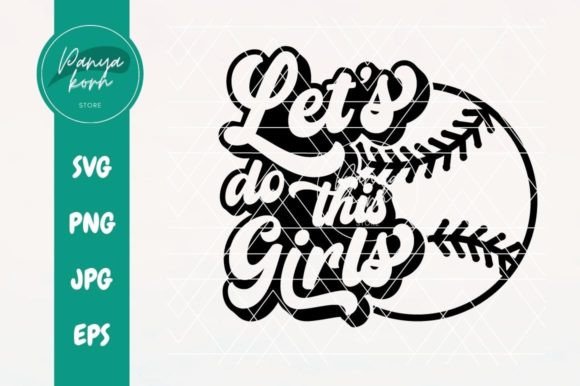
When I first pulled up the Let s Do This Girls Baseball file on my screen, my immediate reaction wasn't just about the cute factor; it was about viability. As someone who spends hours digitizing and stitching for clients, I look past the initial "aww" moment to ask the hard questions: How will this stitch out on a textured sweatshirt? Will the details hold up on a small cap? Is this something I can confidently sell in my shop? This design, categorized under Crafts and Graphics, presents itself as a versatile asset, but its true value lies in how it translates from a digital SVG or embroidery file into a tangible, high-quality finished product.
First Impressions and Visual Personality
The mood of Let s Do This Girls Baseball is energetic yet approachable. It captures that specific niche of youth sports enthusiasm without feeling overly aggressive or cluttered. The layout suggests a balance between text and imagery, likely featuring baseball motifs like laces or stitching patterns that complement the typography. For an embroidery project, this visual personality is crucial. It feels right at home on custom apparel for a team mom, a personalized gift for a young player, or even as boutique branding for a local sports league.
What stands out most is the potential for texture. If the design includes elements reminiscent of grunge or distressed styles, as hinted in similar sports graphics, it offers a fantastic opportunity to play with thread choices. A satin stitch might feel too clean for a rugged look, whereas a well-planned fill stitch with varied densities could mimic that worn-in, loved uniform feel. However, if the source file is purely a graphic SVG intended for printing, the embroiderer must decide whether to trace it for a clean vector look or adapt it with more organic stitch types to enhance its handmade product appeal.
Real-World Application: The Sweatshirt Scenario
To truly test the waters, I imagined a real-life scenario: a customer order for a set of matching family sweatshirts for opening day. The client wants "Let's Do This" emblazoned on the back, with a smaller version on the front pocket. This is where the design's scalability comes into play. On a heavy cotton blend sweatshirt, the fabric texture can sometimes swallow fine details. If Let s Do This Girls Baseball relies on thin running stitches or tiny lettering, it might get lost or cause puckering.
In this context, the design shines when paired with the right stabilizer. A cut-away stabilizer would be my go-to recommendation here to support the weight of the thread and prevent the stretchy fleece from distorting the image over time. For the front pocket application, hoop size becomes a critical constraint. You need to ensure the design fits comfortably within a standard 4x4 or 5x7 hoop without crowding the edges, which can lead to needle breaks or uneven stitching. If the design is too large, it simply won't work for that specific placement, forcing a redesign or a different product choice, like a tote bag design where space is less of an issue.
Navigating Fabric Challenges and Stitch Density
One of the most important aspects of reviewing any digital embroidery file is understanding its limitations on different materials. While Let s Do This Girls Baseball looks great on a mockup, real-world fabrics behave differently. On dark fabric, for instance, you must consider underlay stitches. Without proper underlay, the base fabric color can peek through the thread colors, ruining the crispness of the design. Conversely, on light or thin fabric, high stitch density can cause the material to pucker or tear.
If you are planning to use this on a cap, remember that curved surfaces require careful hooping and often a different approach to column width in the lettering. Thick, blocky letters might look fine on a flat tee but can become distorted on the front panel of a hat. Similarly, if the design includes intricate baseball laces or small decorative accents, these areas need to be inspected closely. Are they too small for a standard needle? Will they require a specialty thread like metallic or variegated to pop, or does the design rely on standard polyester threads? Testing the design on scrap fabric that matches your final product is non-negotiable. It saves you from ruining expensive inventory and ensures your handmade product meets professional standards.
Commercial Viability and Brand Consistency
For Etsy sellers and small shop owners, the question of commercial use is paramount. Before listing Let s Do This Girls Baseball as part of your craft business offerings, you must verify the licensing terms provided with the file. Can it be used for physical goods like embroidered patches, aprons, or pillow covers? Can it be sold as a digital asset? Assuming the license permits commercial embroidery projects, this design has strong potential for holiday embroidery gifts, baby embroidery items, or team merchandise.
The visual appeal of the design directly impacts customer trust. A clean, well-executed stitch-out signals professionalism. If the lines are jagged or the fill stitches gap, it reflects poorly on your brand consistency. Therefore, paying attention to thread color contrast is essential. Choosing colors that harmonize with the garment while ensuring the text remains legible will increase buyer engagement. For example, using classic navy and white on a heather grey shirt creates a timeless look, while bright neon threads might appeal to a younger demographic for summer camp gear.
Practical Notes for the Embroiderer
Before committing to a full production run, here are a few practical steps to take with this specific design:
- Test on Scrap: Always stitch a sample on the exact fabric type you intend to use, whether it's a waffle knit towel or a structured twill cap.
- Check Contrast: View your black and white mockups to ensure the design elements distinguish themselves clearly without relying solely on color.
- Verify Hoop Size: Confirm the dimensions fit your machine's capabilities, especially if you are working with smaller hoops for baby clothes or pockets.
- Inspect Details: Zoom in on the digital file to check for tiny gaps or overlapping paths that could cause thread breaks.
- Stabilizer Selection: Match your stabilizer to the fabric weight; heavier fabrics may need less support, while stretchy knits demand robust stabilization.
- Licensing Check: Re-read the terms regarding resale of finished items versus digital files to avoid legal issues.
Ultimately, Let s Do This Girls Baseball is more than just a graphic; it is a tool for creating connection. Whether it ends up on a nursery decor item celebrating a future slugger or a rugged tote bag for carrying cleats, its success depends on the skill of the maker. By approaching it with a critical eye for stitch quality, fabric compatibility, and practical application, you can transform a simple download into a cherished keepsake or a best-selling item in your store. The design invites creativity, but it demands respect for the technical side of embroidery to truly shine.